
Worth the Detour: A Morning on the Tallgrass Prairie

Exploring Maxwell Wildlife Refuge in Canton, Kansas
If you're looking for an educational and exhilarating experience, look no further than the Maxwell Wildlife Refuge.
Located outside of Canton, Kansas, roughly an hour from Wichita, the Maxwell Wildlife Refuge (MWR) encompasses 2,560 acres of native tallgrass prairie that is home to a free-roaming herd of bison and elk. Numerous bird and insect species, along with coyotes, can also be seen.
With only 4% of the world's native tallgrass prairie remaining, MWR has two major goals: conserving the native prairie and caring for the species that live there. The tallgrass prairie isn't just a field of grass—it's an entire ecosystem. More than 100 plant species grow here, and countless mammals, birds, reptiles, and pollinators depend on those plants for survival.

While MWR is managed by the Kansas Department of Wildlife and Parks, the tram tours are hosted by volunteers. These tours last approximately 45 minutes and allow guests to get up close to the bison herd while learning about the prairie ecosystem.
This has been on my bucket list for a long time, and a few weeks ago, the stars finally aligned. My family and I spent the morning learning about the prairie and the incredible animals that call it home.
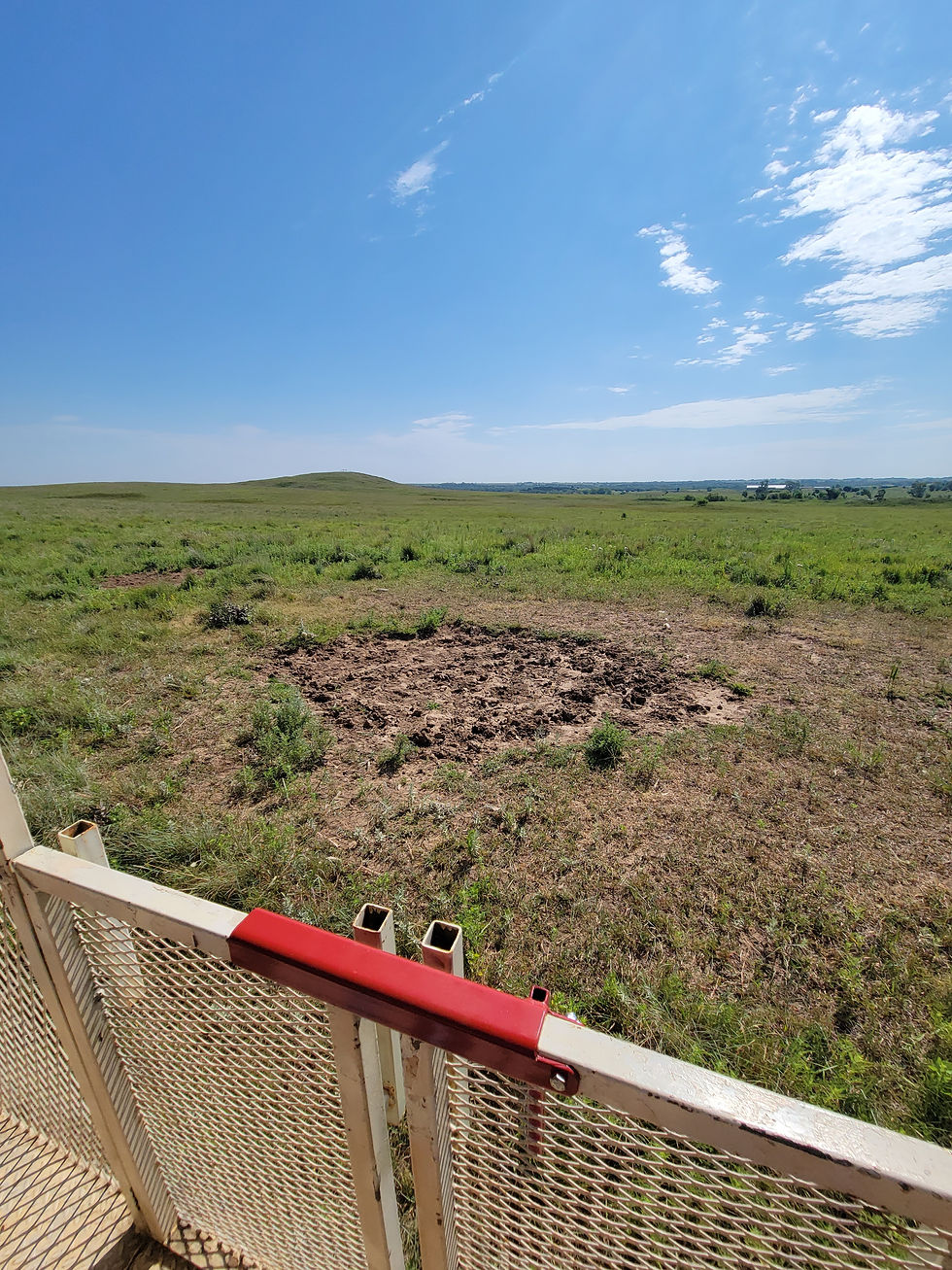
Our tour guide, Les, was full of information and jokes, and it was obvious he genuinely enjoyed what he does. Along the way, he pointed out mud wallows, some more noticeable than others. He explained that bison clear away the grass before wallowing (or rolling) in the dirt and mud to cool off and help protect their skin from insects and other pests.
During our visit, a group of bulls were with the herd because it was mating season. The males were staking their claim to the females, and while we didn't witness a great deal of aggression, we did see a few brief fights. Les shared that during one breeding season, a bull had his lung punctured by another. On the prairie, defending territory and breeding rights can truly be a matter of life and death.

Although this herd lives within the boundaries of the refuge, it receives no supplemental food or veterinary care. The bison survive by utilizing the prairie much as their ancestors did in the 1800s. In return, the prairie depends on the herd just as much as the herd depends on the prairie—a relationship that has shaped this ecosystem for centuries.
Tours run year-round on Tuesdays, Thursdays, and Saturdays. The elk herd is typically easier to see from November through March, as elk tend to seek the shaded creek beds during the heat of Kansas summers. Reservations can be made online, and it's recommended that you book at least three days in advance to ensure space is available.
After your tour, be sure to stop by the welcome center, where you'll find educational exhibits, interpretive displays, and a small gift shop. Proceeds from the shop help support the refuge and its mission. For more information or to reserve your tour, visit: www.maxwellwildliferefuge.com.

As a biologist, I thoroughly enjoyed learning more about the prairie ecosystem and the important role the bison herd plays in shaping it. Getting up close to these incredible animals not only made for great photos but created memories I'll always treasure.
I definitely plan to return—both to see the elk and to experience the ever-changing prairie in a different season. Places like Maxwell Wildlife Refuge remind us that nature is never static. There's always something new to discover, no matter how many times you visit.
Comments